Warsaw Food Halls: Koszyki, Mirowska, Gwardii and Beyond
Five Warsaw food halls and markets worth your appetite, from Art Nouveau Hala Koszyki to the working stalls of Bazar Różyckiego in Praga. What to eat where, and when to go.
Warsaw built its food halls twice. The first wave, beautiful Art Nouveau and red-brick market buildings, went up between 1899 and the 1930s and supplied the city until the wars and communism wore them down. The second wave, all of it within the last fifteen years, turned the surviving halls into food courts that sit somewhere between a Tokyo basement and a Brooklyn warehouse. Today they are some of the best places to eat in Warsaw if you don’t want to commit to one restaurant. Here’s where to go and what to order.
Hala Koszyki: the glossy one
Built in 1908, originally a fish, meat and produce market for the rich neighborhood around it, closed in 1968, abandoned for decades, and finally restored in 2016 as a food-and-drink complex that became the social center of central Warsaw. Today Hala Koszyki has about twenty kitchens and fifteen bars under one Art Nouveau iron-and- glass roof.
What to eat: Italian, Vietnamese, Mexican, Polish, sushi, ramen, burgers, a great deli, a French bakery. Standouts include Cao Sang for Vietnamese, Pizza Cycle for proper Roman-style slices, and the central wine bar for an aperitif before you commit to a kitchen. The crowd is Warsaw’s well-dressed office class at lunch, dating couples in the evening.
The building itself is worth the visit. Look up at the cast-iron beams and original window arches. Koszyki survived two German occupations and one socialist neglect, and you can see all of it in the architecture.
Hala Gwardii: the old-school one
Right next to the much bigger Hala Mirowska on Plac Mirowski. Hala Gwardii is older (1901), smaller, less polished, and that’s the appeal. The restored hall houses a rotating set of food kitchens, a Saturday food market, frequent pop-ups, and a permanent slightly chaotic Polish-streetfood vibe.
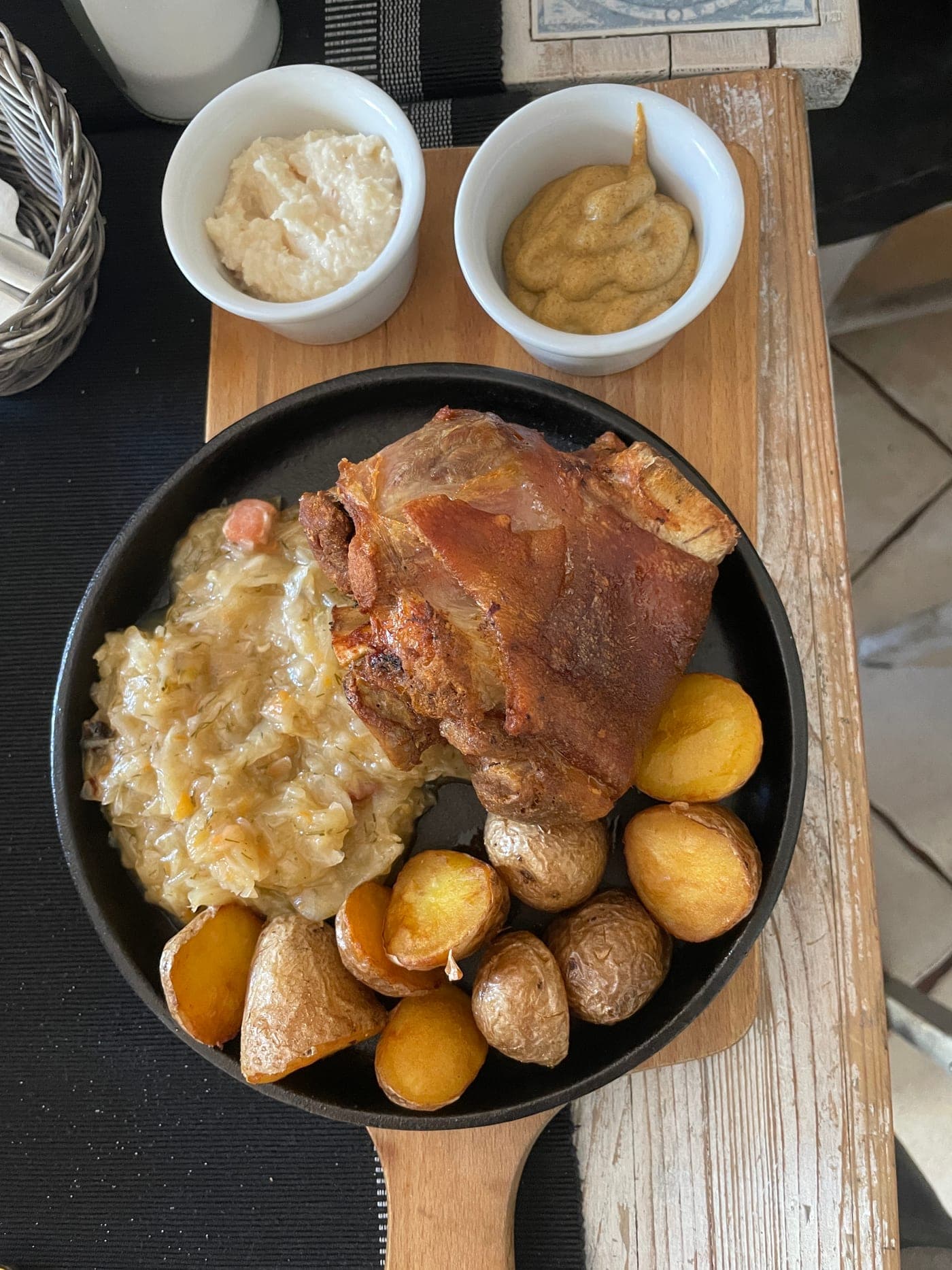
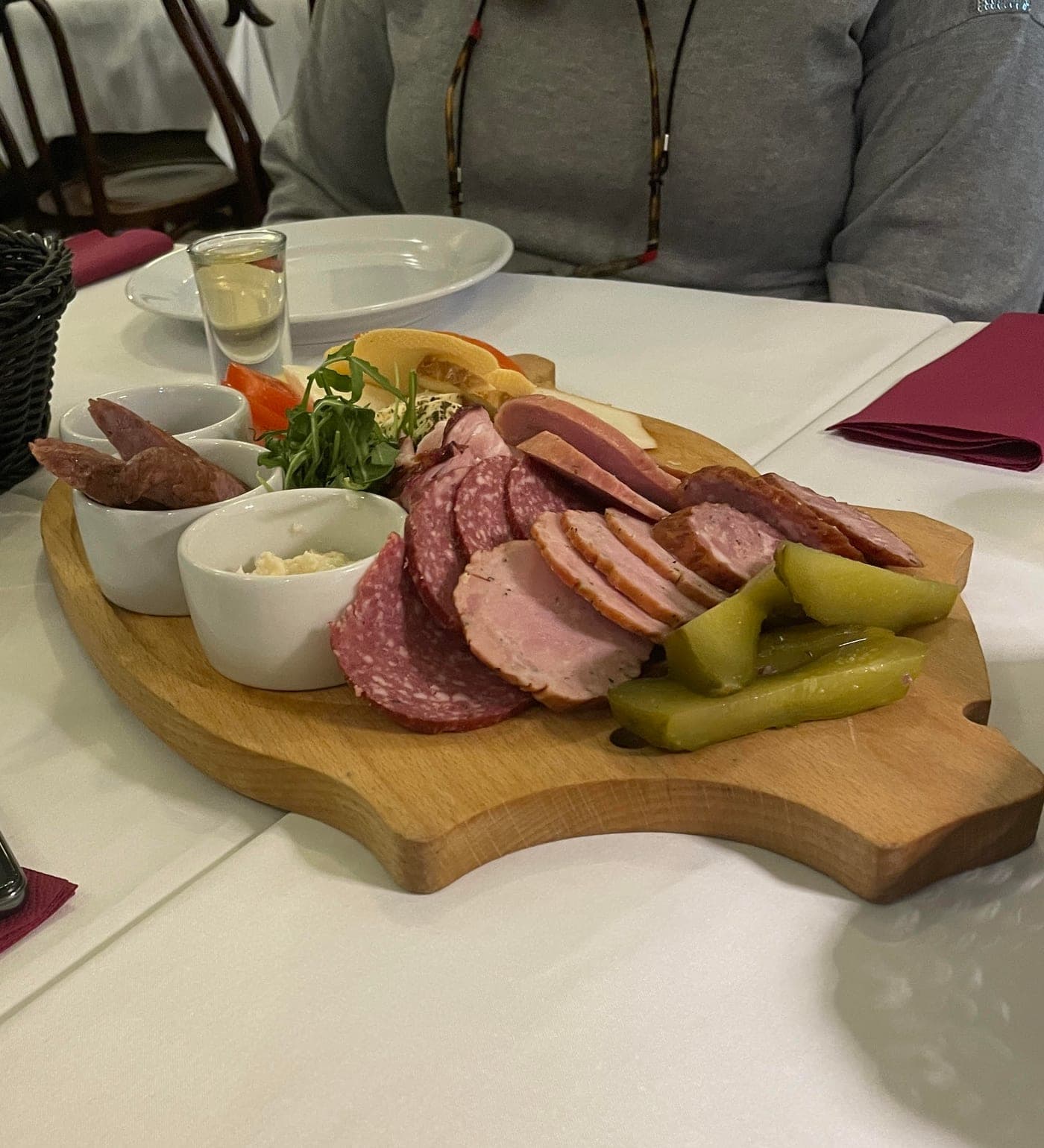
Eat here for Polish flavors with a young-chef energy: modern pierogi, Polish street food, weekend brunch from chefs you wouldn’t otherwise be able to afford. The Saturday market brings small Polish producers (cheese, charcuterie, honey, baked goods) and it’s the most Polish food shopping experience you can have without leaving the center.
Hala Mirowska: the working market
Right next door, and a completely different experience. Hala Mirowska is a working market, not a food court: fish, meat, vegetables, cheese, flowers, household goods. The building has been in continuous use since 1899, survived being blown up in 1939, burned in 1944, rebuilt under communism, and is now one of the last places in central Warsaw where Polish grandmothers still do their weekly shopping.
For visitors, the appeal is the surrounding street market on Saturdays: dozens of small stalls selling honey, smoked fish, fresh twaróg, sausages, seasonal fruit, sour cucumbers from a barrel. Buy a few things and have an impromptu Polish breakfast on a bench, the way Varsovians have been doing for over a century.
Hala Banacha: the locals’ one
On the western edge of the city center, near the medical academy. Hala Banacha is less famous than Koszyki, less photographed than Mirowska, and twice as Polish as both. It’s a working food market with a small cluster of stall kitchens doing some of the cheapest, fastest hot food in Warsaw: pierogi, kotlety, soups, grilled meats.
This is where students, hospital workers and pensioners eat lunch. Go in the middle of a weekday, sit at one of the plastic tables, order whatever looks good. You’ll spend roughly nothing and eat something genuinely Polish.
Bazar Różyckiego: the legend in Praga
Technically not a hall but a market, and a Warsaw legend. Bazar Różyckiego, operating in the same spot since the 1880s, was the beating heart of Warsaw’s black market under communism. Today it’s quieter, partly Vietnamese-Polish, partly old-school Polish, and a few of the food kitchens at the edge do the kind of Polish working-class lunches you can’t find on Instagram.
Try Pyzy, Flaki Gorące on Brzeska just outside the bazaar: pierogi, flaki and pyzy (potato dumplings) at honest prices in a no-fuss kitchen window. It’s in our pierogi shortlist for good reason. The full Praga context is in our neighborhood guide.
How to use Warsaw food halls
The newer halls (Koszyki, Gwardii) are at their best in the evening, when the bars are running and the crowd builds. Saturdays around lunch are also strong but busy. Avoid late Monday, when many kitchens close.
The working markets (Mirowska, Banacha, Bazar Różyckiego) are at their best on Saturday morning when the street stalls are fully set up. Bring small cash. Don’t expect English. Don’t expect a smile, but the food more than makes up for it.
If you’re piecing together a self-guided food day, the halls work well as anchor points: market breakfast at Mirowska, hot lunch at Banacha, drinks and dinner at Koszyki. Or build the whole weekend around them with our 48-hour itinerary. And our food tour starts in the same part of the city as the central halls, so they slot neatly into either side of it.

Guide and storyteller behind Tasty Trails' food and Praga tours. Equal parts historian and eater, happiest somewhere between a milk bar and a vodka museum.
Hungry yet?
Eat your way through this list with someone who knows the city. Small groups, real spots, no tourist traps.