Polish Desserts: Sernik, Makowiec, Pączki and Szarlotka Explained
Forget French pastry. Polish desserts are honest, yeast-based, built for afternoon coffee. A Warsaw guide to the four classics every visitor should try and where to find the best versions in the city.
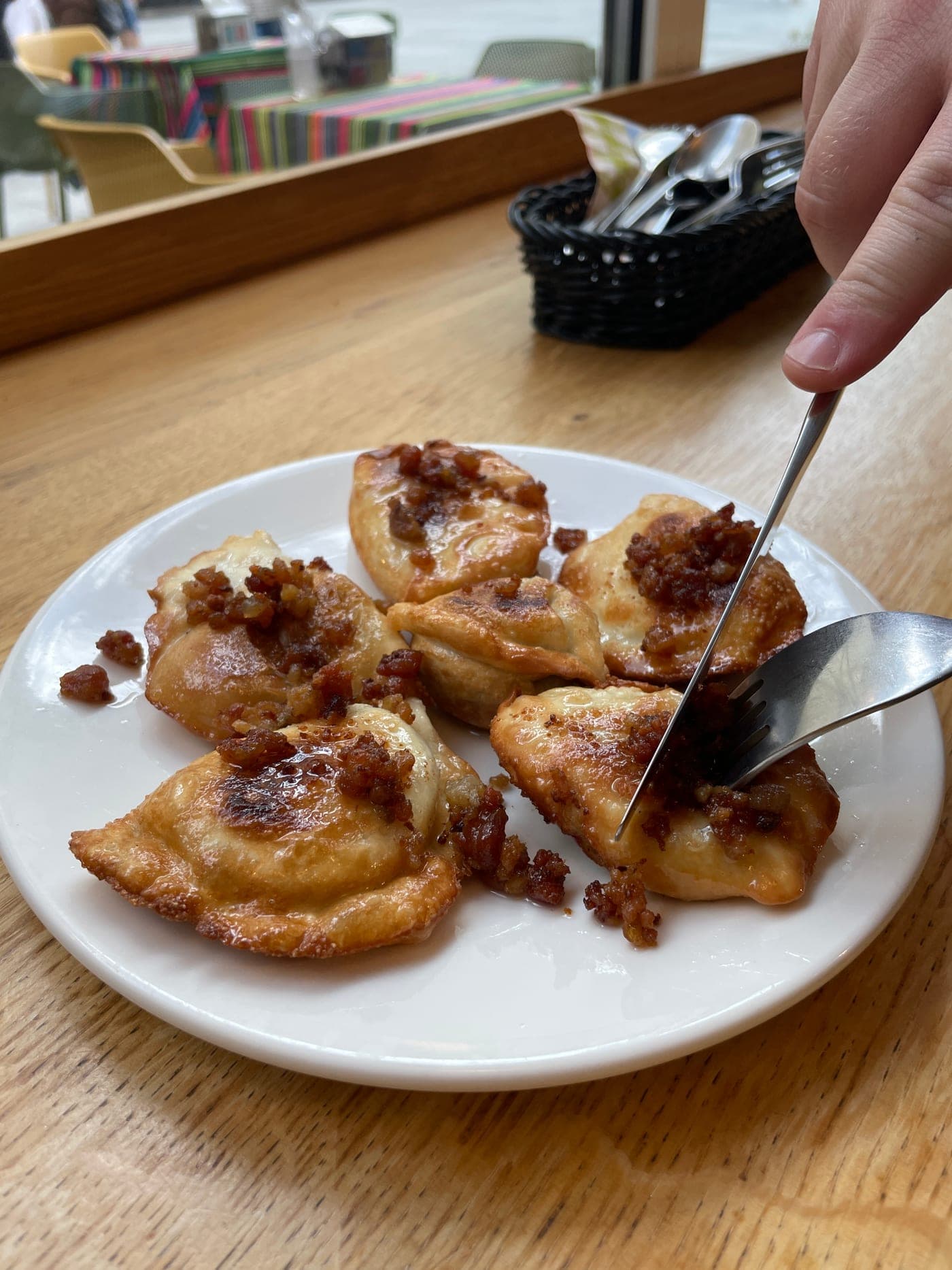
Polish desserts are not French desserts. Nothing here is delicate. Nothing here is layered, glazed, or built like an architect drew it. Polish sweets are honest baked goods, mostly yeast-based, in the tradition of Central European homes where every grandmother had three recipes she defended like state secrets. They taste better the day after, they’re built to go with strong coffee, and the four worth knowing in Warsaw are the four below.
Pączek - the Polish doughnut
Forget what you know about doughnuts. A proper Polish pączek is yeast-raised dough, fried in lard or oil, filled with rose-petal jam (the classic) or plum, custard, or chocolate. The top is glazed with sugar icing and finished with a thin sliver of candied orange peel.
Pączki are eaten any day, but the big day is Fat Thursday (Tłusty Czwartek), the Thursday before Lent, when Poles eat an estimated 100 million pączki in 24 hours. Bakeries in Warsaw have queues out the door. Even if you’re not here in February, the queue is the recommendation.
Warsaw spots worth queueing at:
- Cukiernia Zagoździński (Górczewska 15) - the legend. Operating since 1925, still family-run, still doing the rose-jam pączek the same way. Worth the tram ride.
- Cukiernia Pawłowicz (Chmielna 13) - downtown option, equally serious, smaller queue.
- Cukiernia Górczewska - the other historic name, with a few locations and a properly classic product.
Sernik - Polish cheesecake
Sernik is one of the foundational Polish desserts and it looks like nothing else. Made with twaróg (Polish farmer’s cheese, drier and tangier than cream cheese), eggs, a little sugar, sometimes raisins, baked until the top cracks. The texture is denser and less sweet than New York cheesecake, more like a cake than a dessert.
Variations to know: sernik krakowski has a lattice of pastry on top; sernik wiedeński sits on a shortbread base; sernik na zimno (cold cheesecake) skips the oven, sets with gelatin, and tastes like summer.
Order sernik whenever you see it on a Polish menu. Pair with strong black tea. Cafés that take it seriously: any of the Charlotte locations, A.Blikle on Nowy Świat, and most of the better cukiernie.
Makowiec - poppy seed roll
Yeast dough rolled around a thick paste of ground poppy seeds, honey, raisins, candied orange peel, sometimes walnuts. Baked until the dough is golden and the filling slightly oozes, sliced into spirals. The taste is intense in a good way: nutty, sweet but not sugary, faintly floral.
Makowiec is on every Polish Christmas Eve table, but it’s available year-round at any decent cukiernia. It also makes the single best afternoon-coffee accompaniment in Polish cuisine - a slice of makowiec with strong coffee is one of those moments the country does well.
Try it at A.Blikle, Czerski Cukiernia, or any of the Warsaw cafés that bake their own. Avoid supermarket versions, which skimp on poppy seeds.
Szarlotka - Polish apple pie
Buttery shortcrust on the bottom, a thick layer of stewed cinnamon apples in the middle, sometimes a streusel or meringue on top, sometimes a second layer of pastry. Served warm, ideally with a scoop of vanilla ice cream.
Szarlotka is the universal Polish dessert. It ends Sunday lunches. It closes wedding dinners. It is what your Polish grandmother will serve you when you visit, with no warning, because she always has one in the kitchen.
The trick to a great szarlotka is the apple-to-pastry ratio (apples should dominate) and the spice (cinnamon yes, but not too much). Look for it at small neighborhood cafés rather than big restaurants - the home-baked versions are usually better.
A few honorable mentions
- Krówki: small fudgy caramel candies, the Polish childhood sweet. Buy a bag from a market stall.
- WZ-etka: a vintage Polish layered cake (chocolate, custard cream, sponge) named after a Warsaw street tunnel project. Still served at older cafés.
- Sękacz: a tree-cake from the northeast, made by layering batter on a rotating spit. Big celebration dessert, takes a day to make properly.
- Faworki (chrust): thin fried pastry ribbons dusted with powdered sugar, eaten around Carnival time.
When to eat dessert in Warsaw
Polish dessert culture is not built around the end of dinner. It’s built around afternoon coffee. The classic move is to finish lunch with something light, walk for an hour, then sit down at a cukiernia around 4pm with a slice of sernik or a piece of makowiec and a strong coffee. That hour, between lunch and dinner, is when most of the country’s sweet eating happens.
If you’re building a food-focused day in Warsaw, block out time for it. Our 48-hour itinerary builds in a proper coffee-and-pastry break between the heavy meals, and our food tour always ends with a sweet course - a slice of sernik, a piece of szarlotka or a pączek depending on the season. You can’t taste Warsaw properly without finishing on something sugary. Nobody in this country would let you.

Guide and storyteller behind Tasty Trails' food and Praga tours. Equal parts historian and eater, happiest somewhere between a milk bar and a vodka museum.
Hungry yet?
Eat your way through this list with someone who knows the city. Small groups, real spots, no tourist traps.