Polish Toasts and Drinking Customs: The Unwritten Rules
How to toast, what to say, the eye-contact rule, why zakąski matter, and how to refuse a round without offending anyone. A Warsaw guide’s field manual for your first Polish drinking evening.
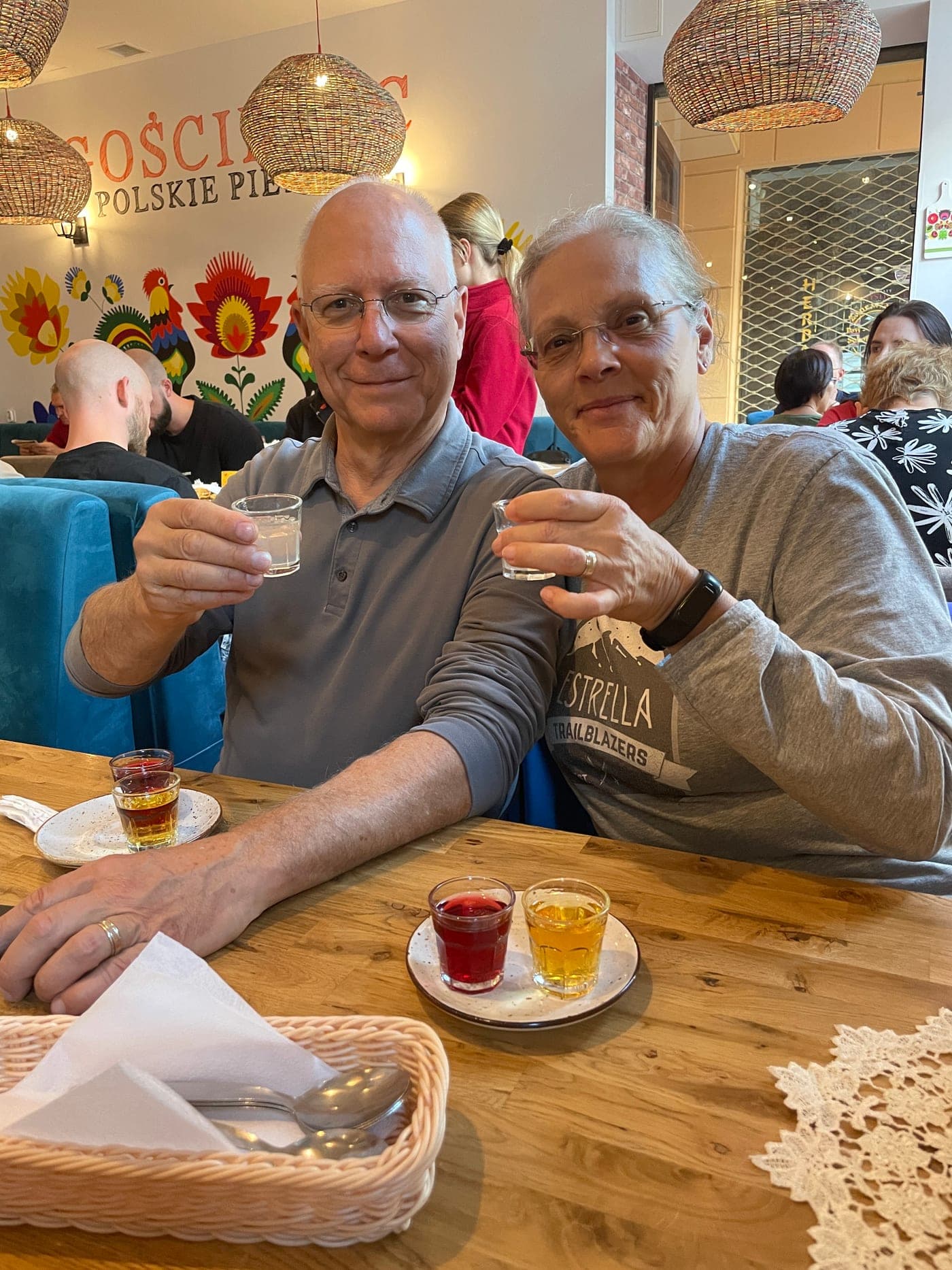
Polish drinking has rules. They’re unwritten, taken for granted by everyone in the room, and visitors who don’t know them usually figure them out an hour late and slightly drunker than intended. The rules aren’t complicated. They’re about timing, eye contact, what you say, what you eat between rounds, and when it’s acceptable to stop. Here is the short field manual I’d hand any visitor before their first Polish drinking evening.
The toasts: what to say, and when
Every Polish round starts with a toast. The host raises the glass, everyone else follows, and nobody drinks until the toast is said. The standard ones, in roughly the order you’ll hear them:
- Na zdrowie("to health") - the default, universal, said for the first round and any round where nobody has come up with anything better.
- Sto lat("a hundred years") - a wish for long life. The first line of the Polish birthday song, also shouted at weddings and farewells. Use it when you want to be warm.
- Za was("to you all") - for hosts to guests, or guests to hosts. Direct and personal.
- Za spotkanie("to the meeting") - for a first toast with new people, especially business or formal.
- No to chlup(literally "well, plop") - irreverent, casual, often used by Poles who think they’ve been too sincere for too many rounds.
The Polish wedding adds Gorzko! Gorzko!("Bitter! Bitter!"), which guests chant until the bride and groom kiss to make the moment less bitter. It’s charming the first time and the eighty-third time.
The eye contact rule
When you clink glasses with someone Polish, you make eye contact. Not a glance. Actually look the person in the eye, briefly, as the glasses meet. Some Poles take this seriously enough to believe that skipping eye contact means seven years of bad sex, which is funny until you’re at a table of older Poles who genuinely care. Just do it. It’s a small thing that signals you understand the room.
Eat between every round
Vodka is not drunk on an empty stomach. After every shot (or every second shot, at the very most), you take a bite of something: pickled herring, dill cucumber, a piece of dark bread with lard, a sliver of kiełbasa, a forkful of tatar. These are called zakąski, and they’re not a snack. They’re an engineering decision: the salt and fat slow alcohol absorption, which is how Poles drink for six hours and still walk home.
Skip the zakąski and you’ll be the visibly drunk foreigner in the room within an hour. Eat them properly and you’ll get through the evening fine, regardless of what’s being poured. For the full breakdown of what to eat with what, our vodka guide covers each category and its pairings.
A few other unwritten rules
- The host pours. Especially in homes, the host fills everyone’s glass. You don’t pour your own. Reaching for the bottle is mildly rude unless you’re very familiar.
- Refusing the first round is awkward. If you’re not drinking that night, say so before glasses are poured. Once they’re full, joining the toast (even with water or juice) is the polite move.
- Don’t leave a glass half-empty too long. The host will assume something’s wrong and start asking questions. Either drink it or signal that you’re slowing down by leaving it close to full.
- Toast with what you have. Beer, wine, water, juice. If everyone else is raising a glass, you raise yours too, whatever’s in it.
- Don’t cross arms when clinking. Reach to each person individually, not over someone else’s arm. Polish tables can produce a small dance of glasses; that’s fine, that’s the point.
When and how to stop
Polish hospitality is generous to a fault. If you don’t want another round, you have to say so clearly, and probably more than once. "Dziękuję, na razie wystarczy" ("thanks, that’s enough for now") is the polite formula. Putting your hand over the glass works too. Refusing once and then drinking when the bottle comes back around is normal; the host will likely offer four or five more times before believing you.
Genuine refusal isn’t insulting if you’re sincere about it. What’s slightly rude is the visitor who keeps drinking out of politeness, gets visibly drunk, and then complains. Pace yourself. The Poles at the table are doing it on purpose, and you’re welcome to join, but no one will respect you less for opting out of the third bottle.
If you want to learn this in practice
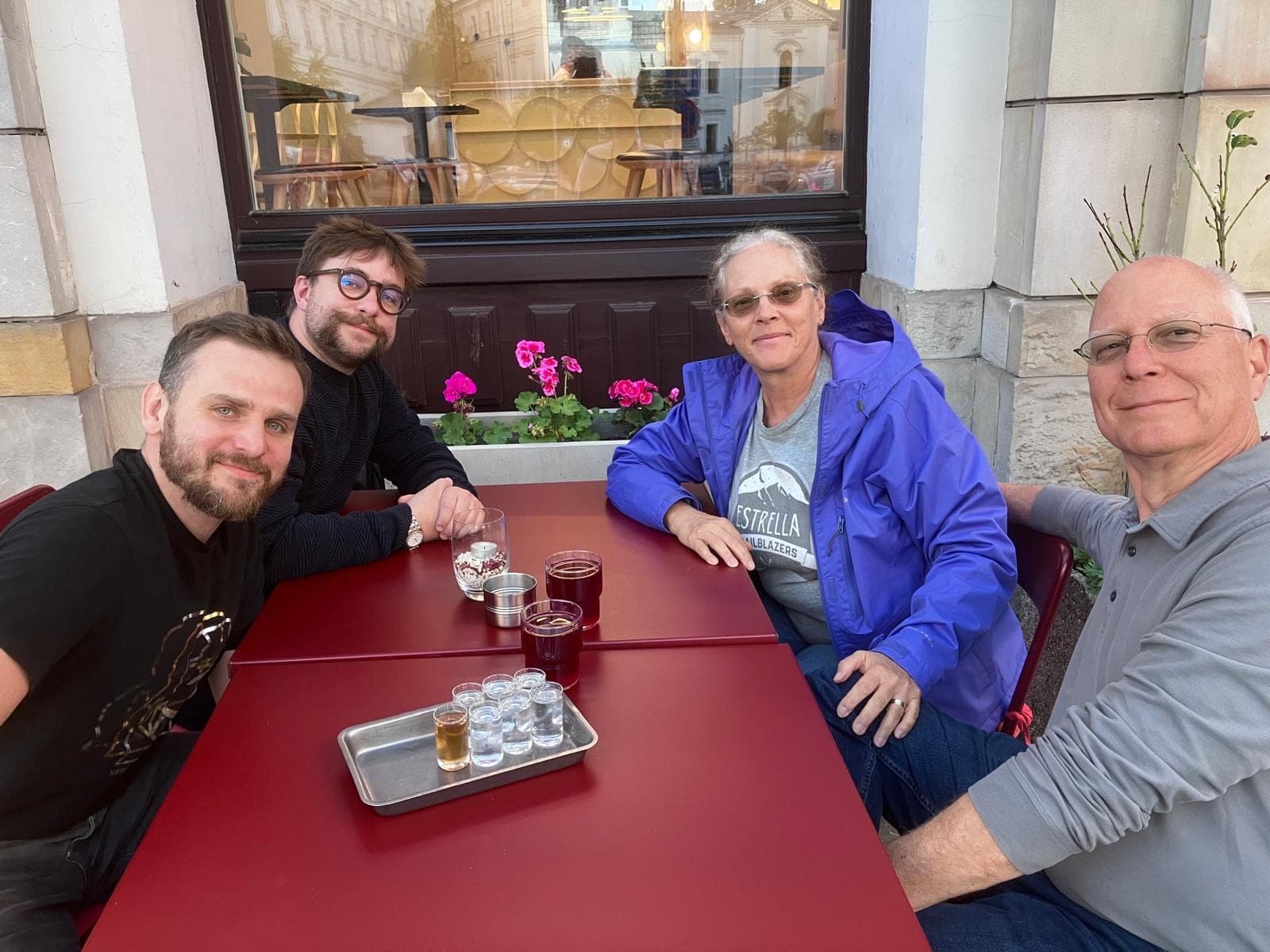
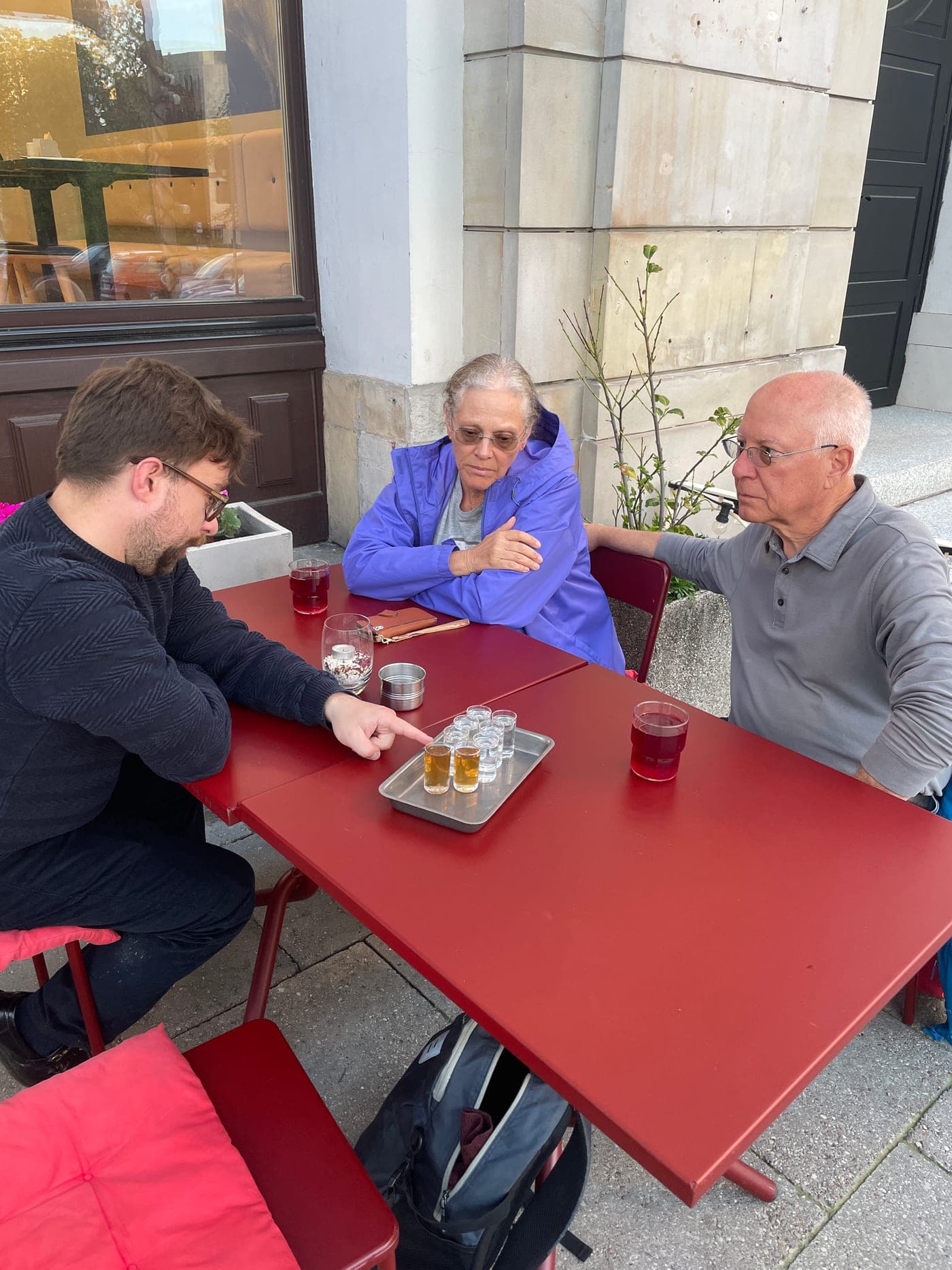
Reading about toasts is one thing. Sitting at a table with six chilled glasses of different vodkas, the proper zakąski in front of you, and someone walking you through which one’s the rye, which one’s the potato, what to toast with each, and how to pace the evening, is another. That’s our Polish Vodka Tour in one sentence. Small groups, real local bars, the proper appetizers, and by the end of 3 hours you can hold your own at any Polish table for the rest of your life.

Warsaw guide who's been showing visitors the city's real food scene for three years. Spends Sundays at Hala Mirowska, weeknights chasing the city's best żurek.
Hungry yet?
Eat your way through this list with someone who knows the city. Small groups, real spots, no tourist traps.